
No products in the cart.
Vacuum Sealers
Best Vacuum Sealer for Sous Vide: How to Pick One That Seals Right Every Time
20
Nov
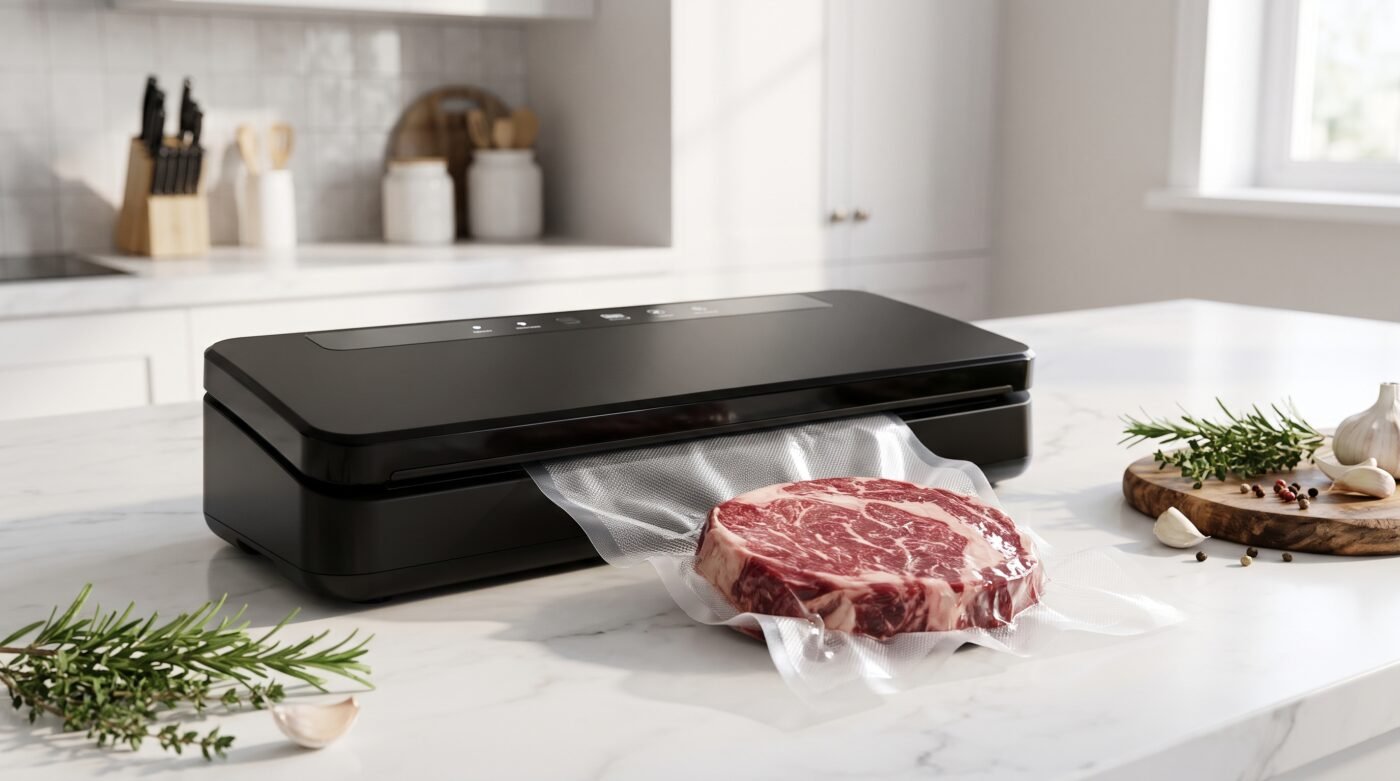
Sous vide cooking lives or dies on the seal. A steak in a bag that leaks is a steak boiled in water. No amount of careful temperature control saves it. In short, the seal is everything.
That’s why the best vacuum sealer for sous vide isn’t the most expensive machine on the shelf. It’s the one that pulls the air out cleanly, seals the bag shut, and holds that seal underwater for hours. Here’s what to look for. How to use one step by step. And which sealers we sell at Best Choice Tablets for home cooking in Pakistan.
Table of Contents
What makes a vacuum sealer good for sous vide?
A sous vide bag spends a long time underwater, so the seal has to do more than look closed. Four things matter when you’re picking the best vacuum sealer for sous vide.
First, suction strength. A sealer that leaves air in the bag leaves the food floating. As a result, the food cooks unevenly. The home sealers we sell pull 75kPa — plenty for a bag of steak, chicken or vegetables.
Second, a wide, even seal line. A thin or patchy seal is the one that gives way halfway through a cook. For example, one corner lifts, water gets in, and the bag is done. Look for a solid sealing bar and a seal you can see and feel all the way across the bag.
Third, a moist mode. Meanwhile, marinades, sauces and juicy cuts push liquid toward the seal while the machine draws the air out. A moist setting slows the suction at the end. The liquid stays in the bag instead of reaching the seal line.
Fourth, the right bags. External sealers like the ones below need textured, food-grade vacuum bags or rolls. In other words, the tiny channels in the bag are what let the air escape. Smooth bags made for chamber machines won’t work properly on a home sealer.
How to use the best vacuum sealer for sous vide
Five minutes, once you’ve done it twice. If sous vide itself is new to you, read a time-and-temperature guide before your first cook. The sealing is the easy part. The timing is what makes the meal. For cooking times and temperatures, see Anova’s guide to sous vide.
First, season the food and put it in the bag. Leave 8 to 10 centimetres of empty bag above the food. The sealer needs that space to grip and seal.
Next, lay the open end flat across the sealing bar and close the lid. If the food is wet or marinated, switch to moist mode before you start.
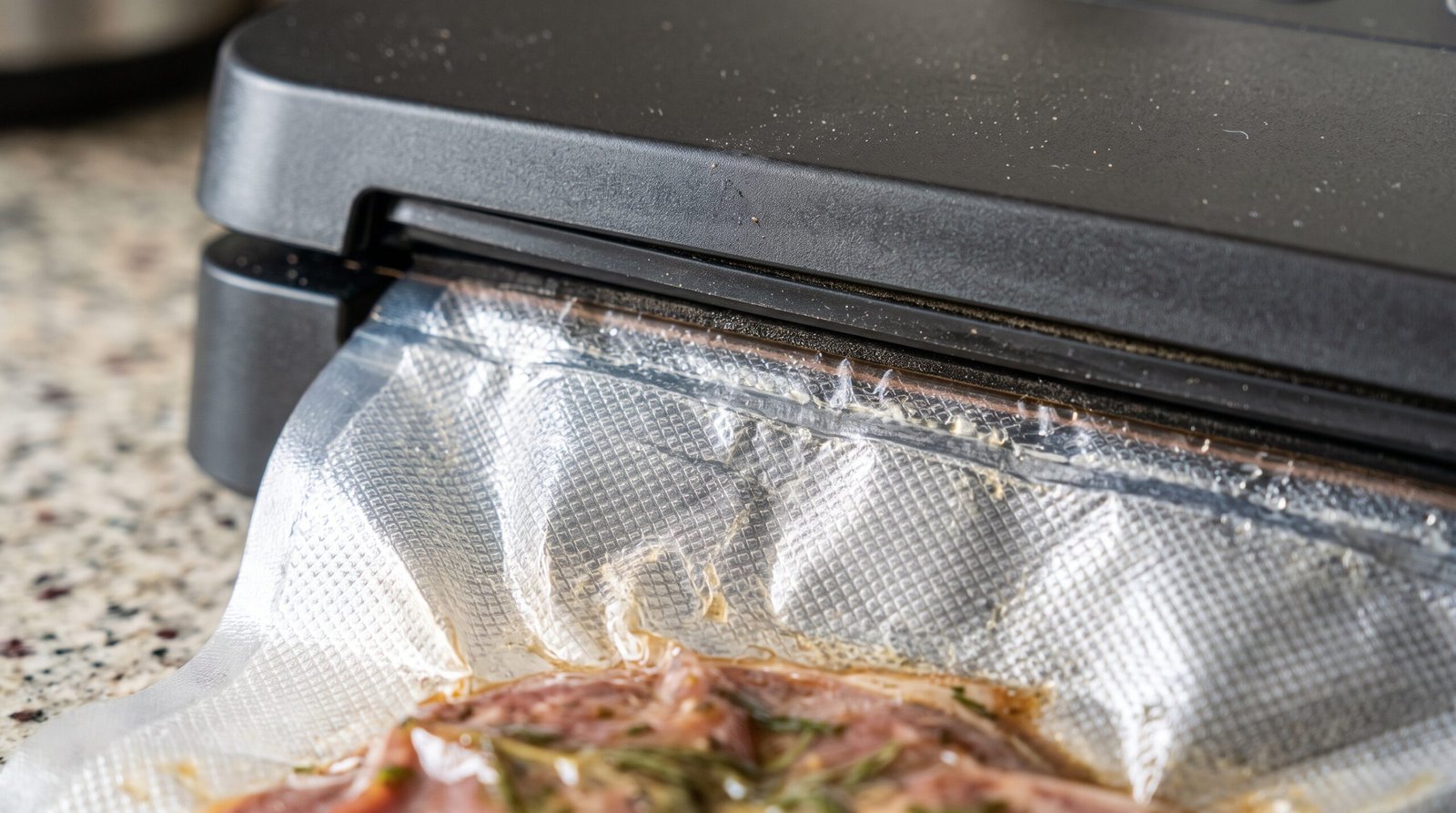
Then let the machine draw the air out. You’ll hear it change pitch and see the bag pull tight around the food. That’s the moment to watch. Don’t pull the bag while it seals. When the machine finishes, press along the seal line with your fingers: smooth and continuous, no gaps, no wrinkles.
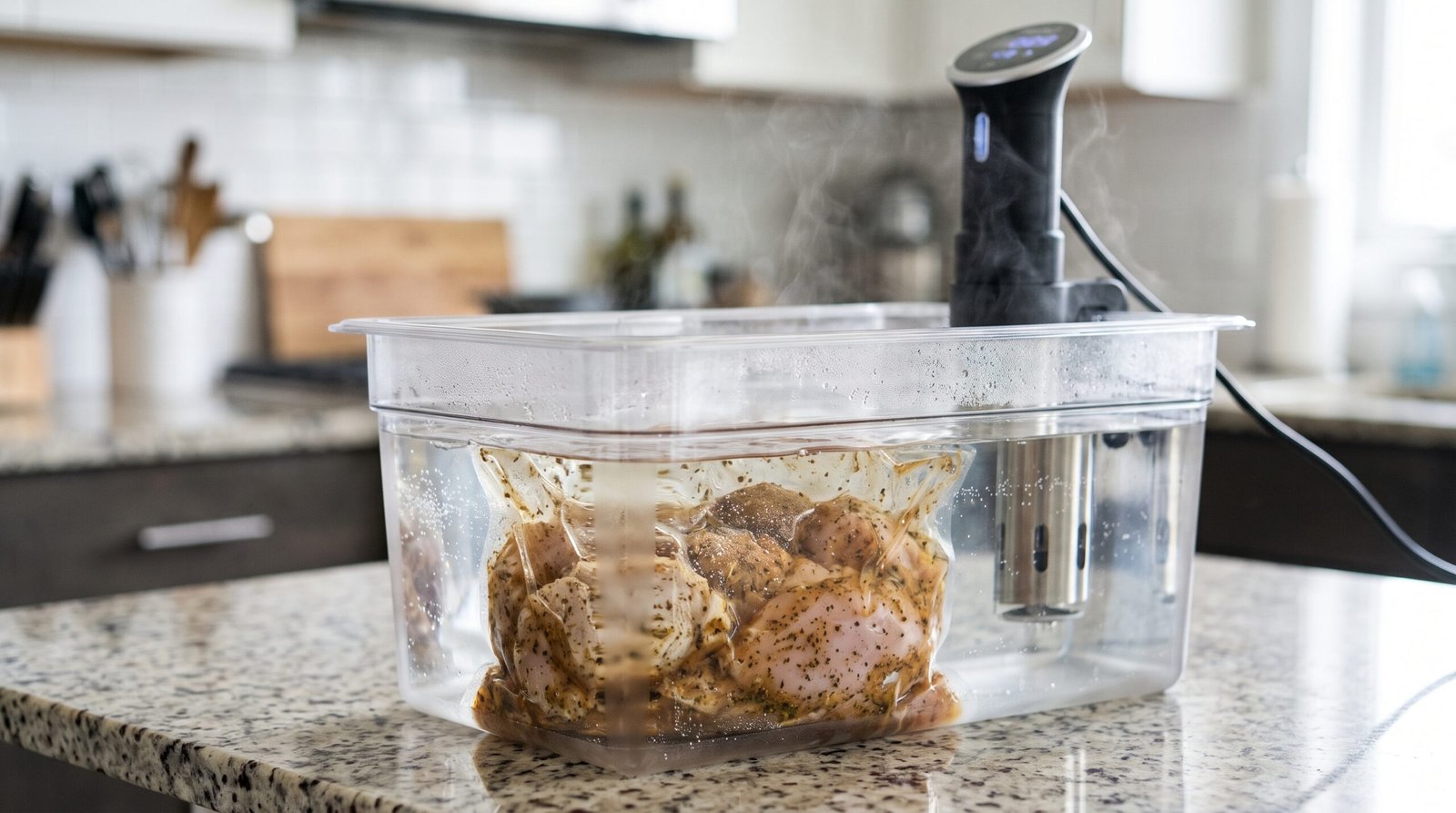
After that, check the seal, then lower the bag into the water bath. If it floats, there’s still air inside. Open it, dry the top of the bag, and seal it again. A good seal sinks and stays under.
Finally, clip the top of the bag to the side of the container. That keeps the seal above the water line. Then cook as your recipe says. When the food’s ready, take the bag out and open it. Then sear the meat quickly in a hot pan for colour.
External vs chamber sealers: which one fits a home kitchen?
There are two kinds of vacuum sealer, and the difference matters for your wallet.
External sealers — also called suction sealers — sit on the counter. They pull air out of the open end of a bag, then seal it. They’re affordable, easy to store, and exactly right for home sous vide. Every sealer in this guide is an external sealer.
On the other hand, chamber sealers put the whole bag inside a chamber. They remove the air from the chamber itself, then seal. They handle liquids better and work with cheaper smooth bags. Still, they’re big, heavy and priced for restaurants. For a home cook doing sous vide a few times a week, a chamber machine is more than you need. In fact, the best vacuum sealer for sous vide at home is an external one.
The vacuum sealers we sell for sous vide at home
Above all, match the machine to how you cook — not to the biggest spec sheet. These are our picks for the best vacuum sealer for sous vide at home. The sealers on our own shelves, with today’s prices. All of them are in stock, with Cash on Delivery across Pakistan.
The Food Saver at Rs 17,500 (was Rs 20,000) is our budget pick for home sous vide. It pulls 75kPa and works on 110V and 220V. It does the job for a family cooking steak, chicken or fish a few nights a week. At Rs 17,500, it’s the best vacuum sealer for sous vide if you’re starting out.
Next up, the TVS 2021 at Rs 18,500 (was Rs 22,000) adds a wider 32cm seal. Bigger bags and bigger cuts fit without folding. Same 75kPa suction, same simple one-button sealing. If you cook bigger cuts, this is the best vacuum sealer for sous vide for you.
Then there’s the P280 at Rs 28,000 (was Rs 35,000). It’s the step up for heavier home use. It’s a proper food vacuum sealer packaging machine. Built for households that seal in bulk, portion meat for the week, or run a small home kitchen. For bulk sealing, it’s the best vacuum sealer for sous vide in our range.
Finally, for restaurants and catering, the Brother VC99 at Rs 320,000 (was Rs 350,000) is a different class of machine. It’s a commercial sealer with a 50cm sealing bar and an 8mm seal width that handles volume. It seals for sous vide too — but it’s far more machine than a home cook needs.
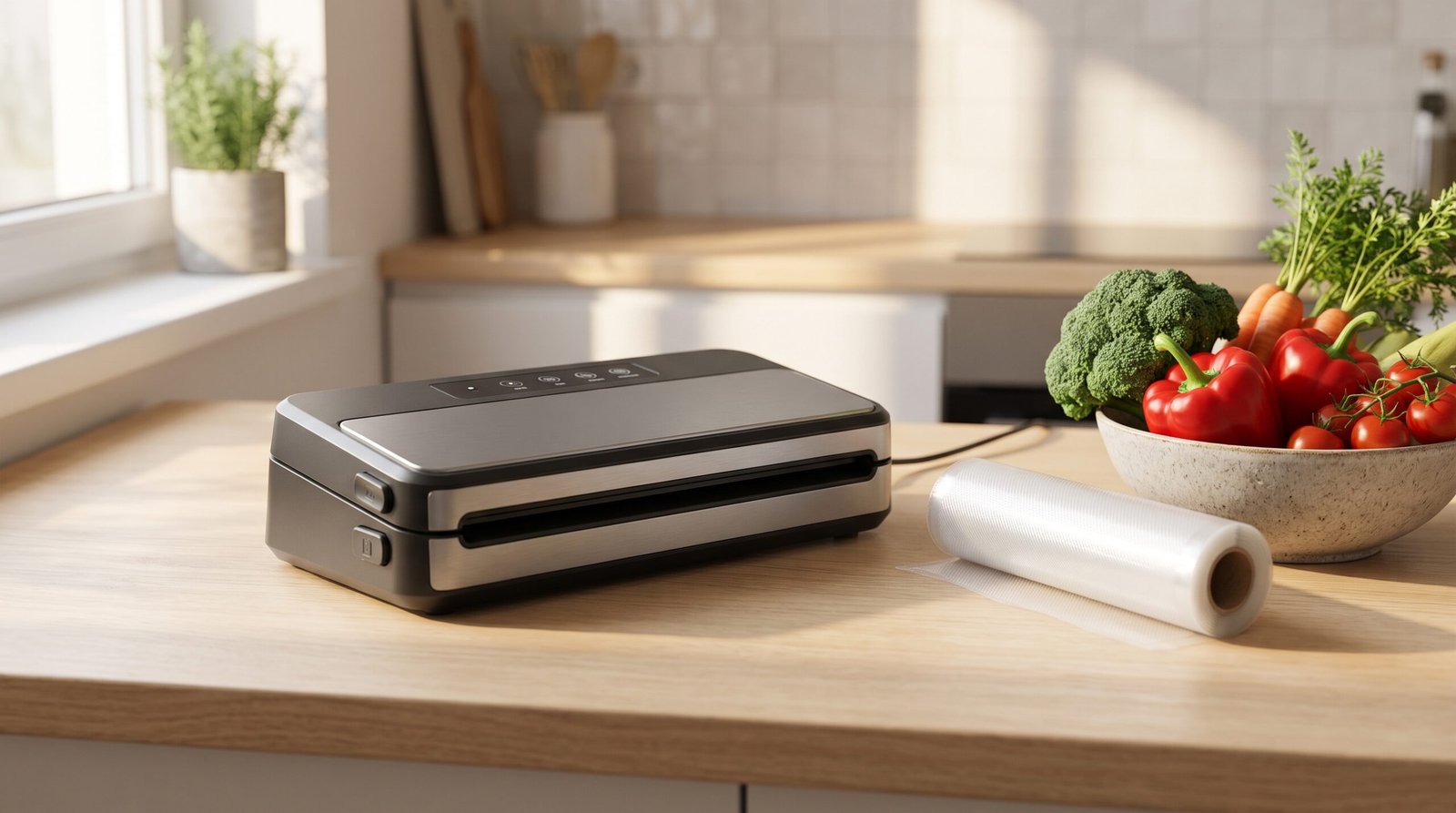
In the end, whichever sealer you choose, you’ll need bags. Our food-grade vacuum sealer bag rolls run from Rs 1,000 to Rs 6,700 depending on size. Cut them to length, seal one end, and you have a bag that fits any cut.
Bags, rolls and what not to seal
First of all, use food-grade vacuum bags or rolls rated for heat. Sous vide bags sit in hot water for hours. Ordinary plastic can’t take that.
Keep the top few centimetres of the bag clean and dry before sealing. After all, a wet seal line is the most common reason a seal fails.
Don’t seal sharp bones without wrapping them first. A bone edge can puncture the bag from inside. Don’t seal liquids on their own. Freeze soups and sauces in a container first, then seal the frozen block. And don’t reuse a bag that held raw meat.
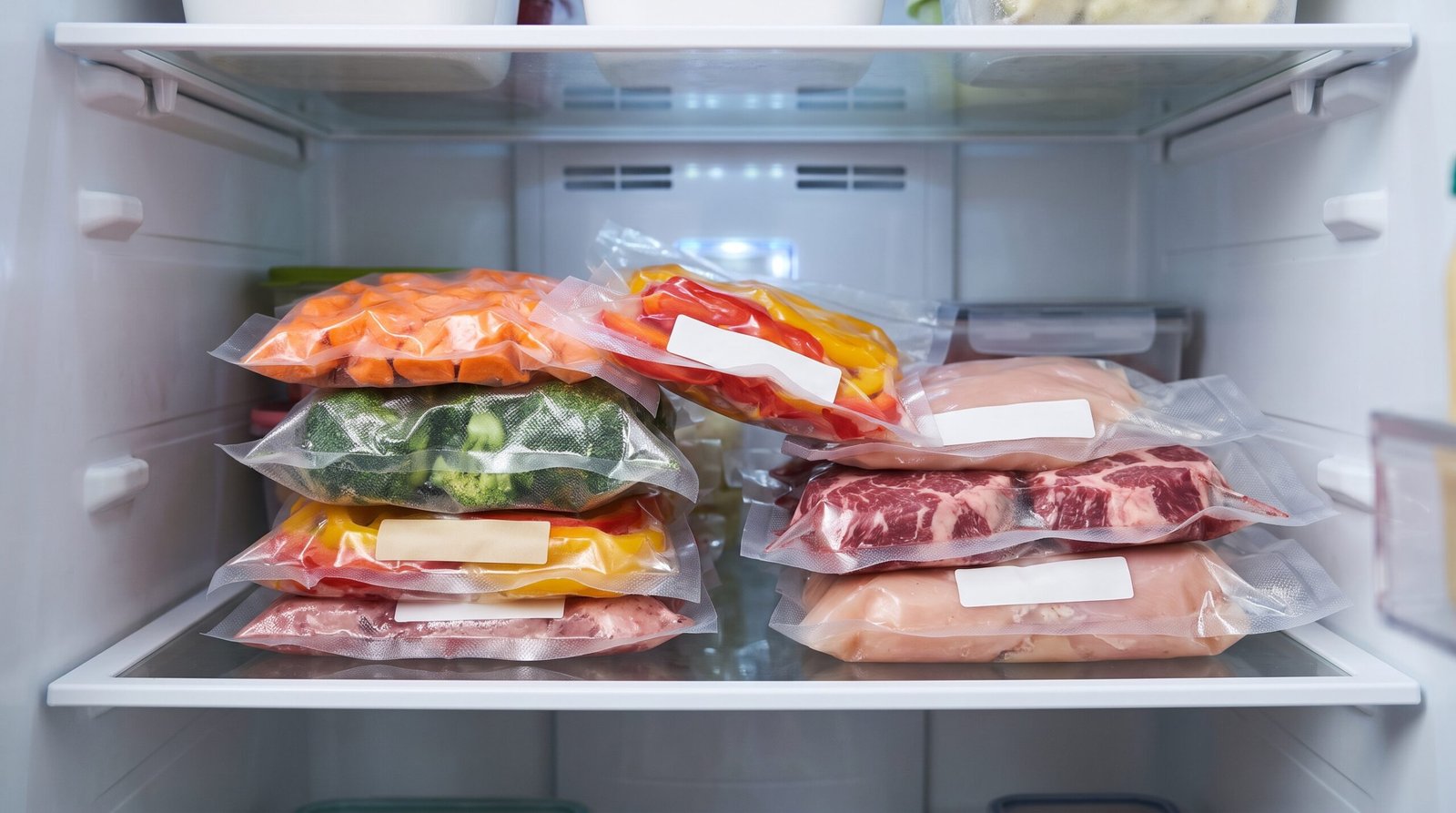
For storage, vacuum sealing keeps food fresh far longer than an open bag. A sealed pack in the fridge lasts days longer than an unsealed one. In the freezer, it keeps freezer burn away for months.
Best vacuum sealer for sous vide: frequently asked questions
Can I use any vacuum sealer for sous vide?
In short, almost any external sealer with a strong, even seal works for sous vide. You don’t need the best vacuum sealer for sous vide money can buy. You don’t need a chamber machine at home. What matters is suction strength, a clean seal line, and heat-safe bags — not the price tag.
Do I need special bags for sous vide?
Yes. Use food-grade vacuum bags or rolls rated for heat. Regular zip-lock bags aren’t the same. They can’t hold a seal underwater for hours. And an external machine can’t vacuum-seal most of them at all.
How long does vacuum-sealed food last?
Sealed food keeps several times longer than unsealed food. In the fridge, a sealed pack stays good for days longer than the same food in an open bag. In the freezer, it keeps freezer burn away for months. Exact times depend on the food — always check before cooking.
How much does a vacuum sealer cost in Pakistan?
Home vacuum sealers at our store start at Rs 17,500 for the Food Saver. The TVS 2021 is Rs 18,500 and the P280 is Rs 28,000. Commercial machines like the Brother VC99 start at Rs 320,000. All prices include Cash on Delivery.
Want help picking the best vacuum sealer for sous vide for your kitchen? Call or WhatsApp us on 03480225229, 03212437755 or 03334171952. Tell us what you cook, and we’ll point you to the machine that fits. Every sealer on this page is in stock and available with Cash on Delivery across Pakistan.
